

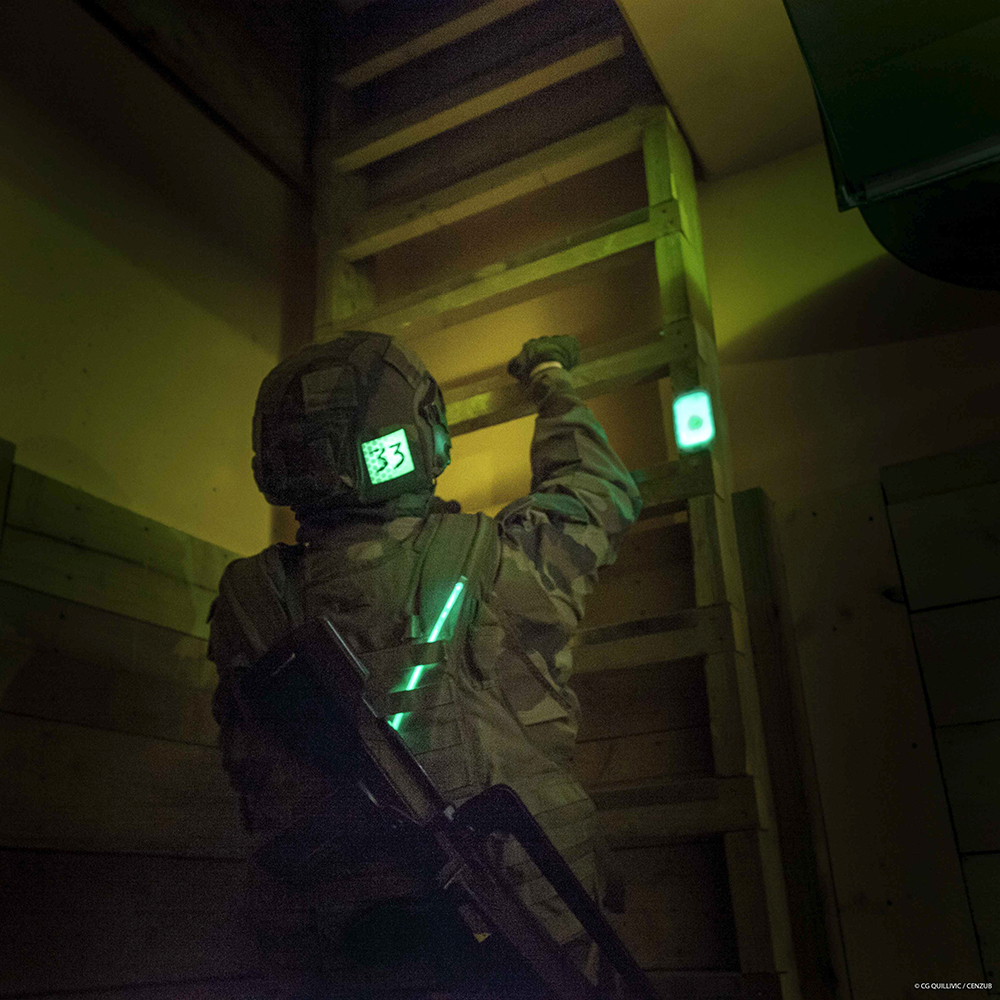
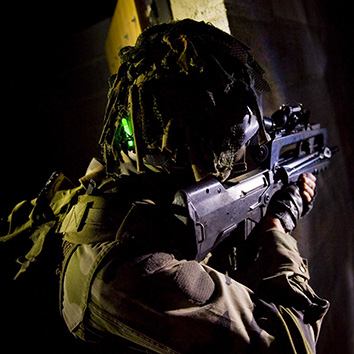

Key Features
No power source required: Hours of light with no battery, no charging and no electrical draw, which also means no electrical signature and nothing to fail in the cold.
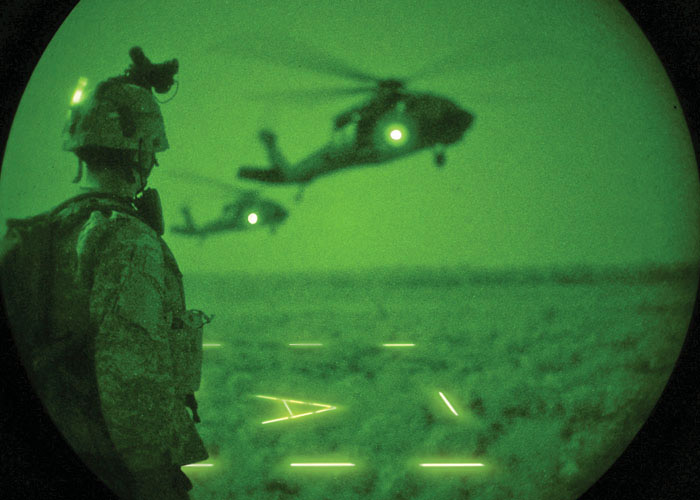
Infrared versions: IR lightsticks are visible through night vision equipment while remaining dark to the unaided eye, allowing marking and identification without revealing a position.
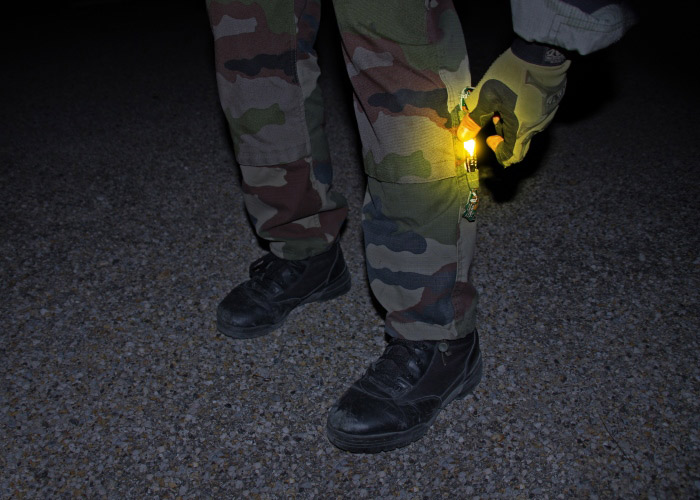
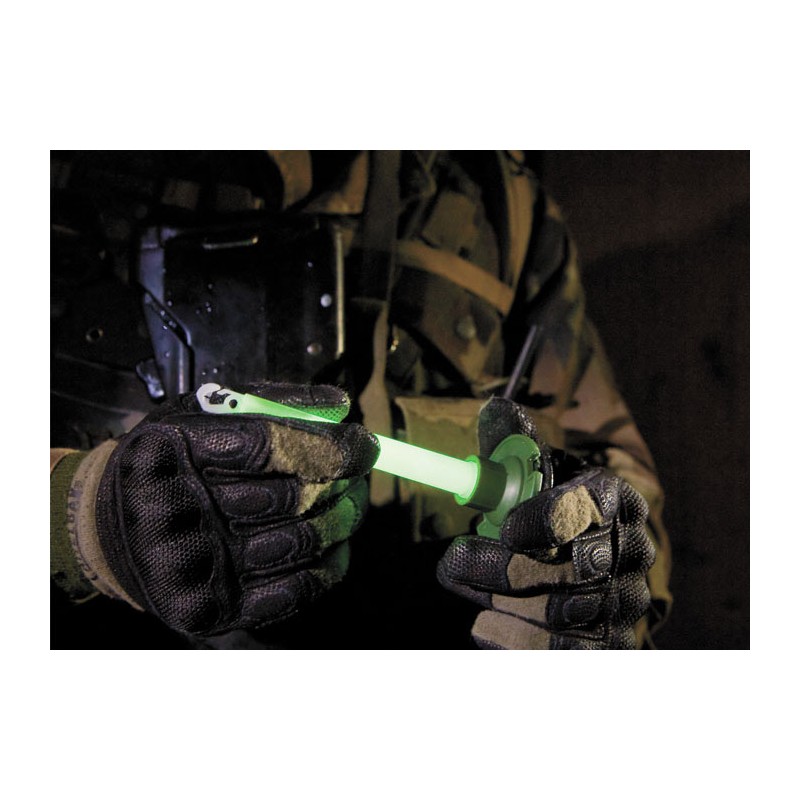
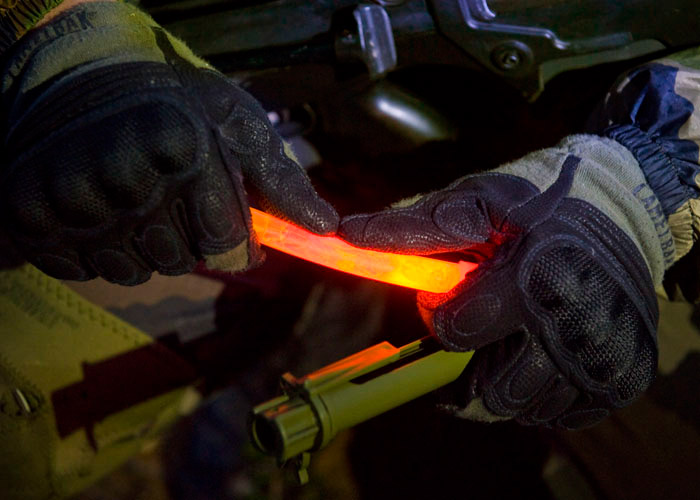
Instant activation: Bend or snap and the light is running. No training requirement and nothing to go wrong under stress or with gloves on.
No heat, flame or spark: Unlike flares or incendiary markers, chemical lights generate no heat and cannot ignite. They are usable in enclosed spaces and around fuel and ordnance.
Long shelf life: Stored correctly, unactivated lightsticks remain serviceable for years, which reduces resupply pressure on forward and austere locations.
Controlled output: Colour and duration are selected to the task, from a subdued glow for covert marking to a 12-hour high-visibility stick for static positions.
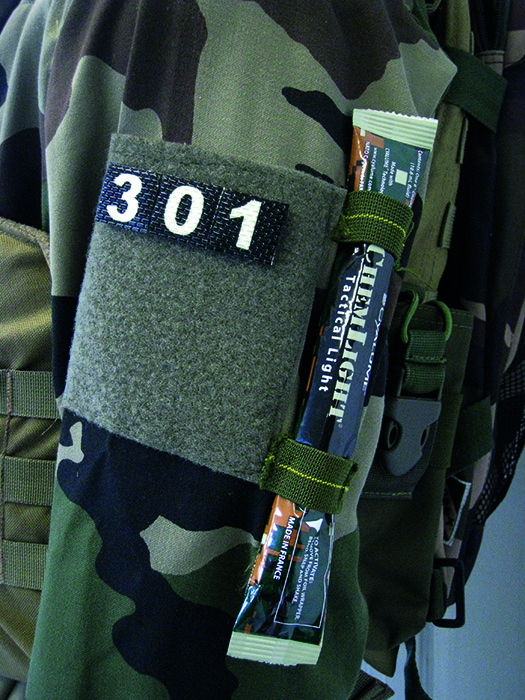
Deployable by hand: Compact enough to carry in quantity, with hooks, loops and mounts for attachment to personnel, equipment, vehicles and structures.
Applications
Marking and identification: Designating friendly forces, marking routes and landing zones, identifying equipment, outlining structures and indicating hazard areas.
Maritime safety: Personnel marker lights on life jackets for man overboard recovery, and survival signalling from the water or a liferaft. See also our life jacket lights and emergency lighting for ships.
Emergency signalling: Distress signalling, marking casualty collection points, and guiding search and rescue teams to a position.
Medical and evacuation: Lighting triage points and field treatment areas, and marking evacuation routes and exits where the power is out or was never there.
Covert operations: Infrared marking for NVG-equipped personnel, covert map reading, and identification that stays invisible to anyone without night vision.
Training: Simulating device activation, marking targets and designating safe zones during exercises.
Maintenance and recovery: Temporary light for vehicle repair, work in confined spaces, and accident scenes where introducing a heat or ignition source is unacceptable.
For permanent marking that needs no activation and no replacement, see our tritium light sources, which run continuously for years rather than hours.
Product Range
1.5″ Mini ChemLight
The smallest stick in the range, at 1.5 inches. Four hours of visible output in green or orange, with an infrared version for night vision use. Small enough to carry in quantity and to attach where a full-size stick will not fit, which makes it the usual choice for personal and equipment marking rather than area illumination.
Duration: 4 hours visible. IR version available.


4″ and 6″ ChemLight
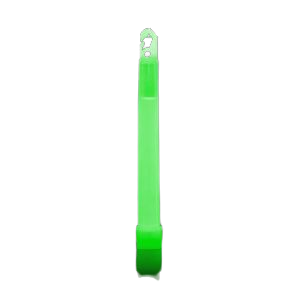
The standard military lightstick and the most widely issued size. Ten centimetres long with an open hook and a hole for attachment, used for route marking, covert map reading and general field marking by forces worldwide. The infrared version runs for eight hours, longer than its visible counterpart, which suits it to overnight covert marking.
Duration: 6 hours visible, 8 hours infrared. Available in 4″ and 6″.
15″ Lightstick, Impact and Non-Impact
The long-duration stick, running twelve hours in visible output. Supplied in impact and non-impact versions, the impact type being intended for deployment by throwing. At this size it functions as a position or area marker rather than a personal one, and it is the stick to use where something must stay lit through a full night without being revisited.
Duration: 12 hours visible, 3 or 8 hours infrared. Impact and non-impact.

3″ LightShapes
Shaped markers rather than sticks, three inches across, which lets a symbol carry meaning at a distance instead of just a point of light. Useful where different markings need to be told apart quickly: distinguishing one route from another, or one category of casualty, vehicle or position from the next.
Duration: 4 hours visible, 3 or 8 hours infrared.
Flex Bands
A flexible band rather than a rigid stick, so it wraps around an arm, a helmet, a weapon, a rail or a post. That makes it the practical choice for marking people and round objects, where a straight stick has to be taped or tied on.
Duration: 6 hours visible, 3 or 8 hours infrared.
PML Personnel Marker Light
A compact marker designed to attach to a life jacket so that a person in the water can be located. It belongs in liferaft and vessel rescue kits and in the pocket of a life jacket, where it costs nothing to carry and needs no check or charge before use. Eight hours of output, which covers a night search.
Duration: 8 hours.
SOS Survival Signal Light
A lightstick on a cord. Rotated by hand it traces a continuous circle of light, which is a far stronger distress signal than a static point because the movement and the shape read as deliberate rather than incidental. The circle is visible up to one mile at ground or sea level and up to three miles from the air, which is the relevant figure when the search is being flown.

10″ SnapLight with Metal Support
A 25 centimetre stick supplied with its own metal stand, which holds it at 30 degrees to the ground so that no part of the stick is obscured by the surface it sits on. The whole length stays visible, which materially increases the range at which it reads.
Used for marking landing fields, identifying exits and routes, lighting maintenance work in confined spaces, immediate illumination at accident scenes, and night traffic control.
CyPouch Tactical Holder
Lightsticks degrade under ultraviolet exposure, so how they are carried affects whether they perform. The CyPouch keeps them shielded and to hand, with metal loading rings and elastic loops so a set can be prepared in advance and drawn without looking. Ambidextrous, compact, and MOLLE compatible.
Accessories
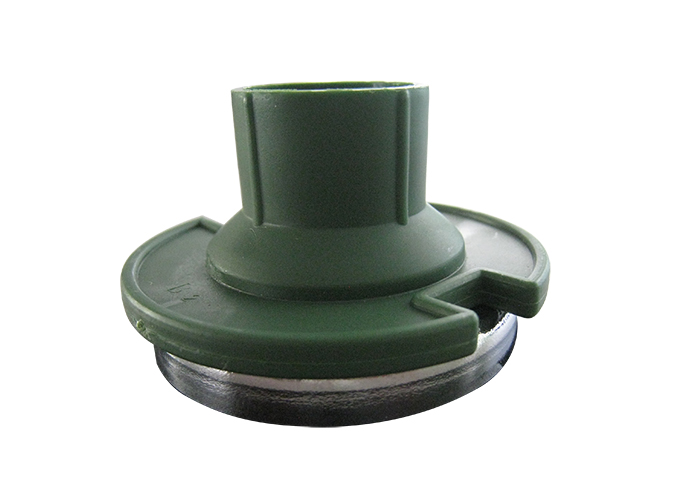
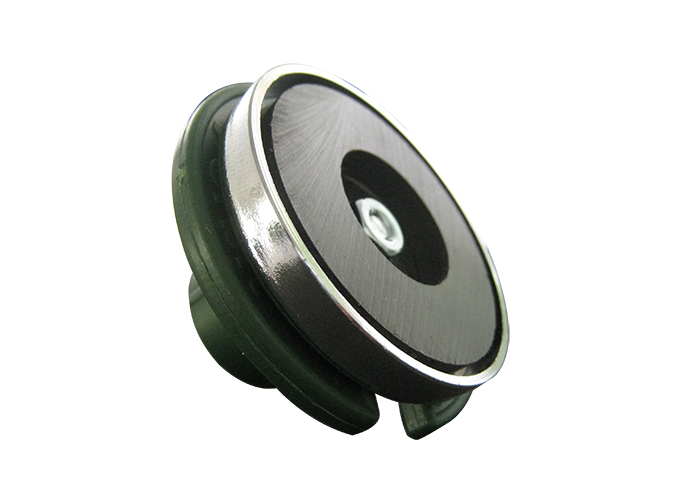
MAGNETIC BASE
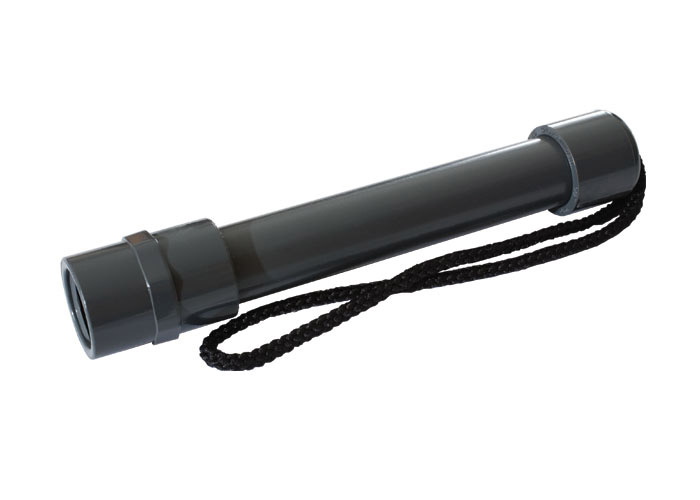
DIRECTION HANDLE
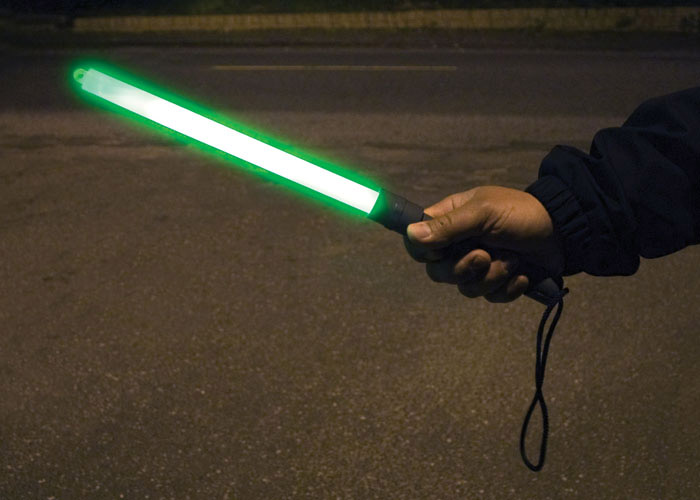
COMBAT LIGHT SHIELD
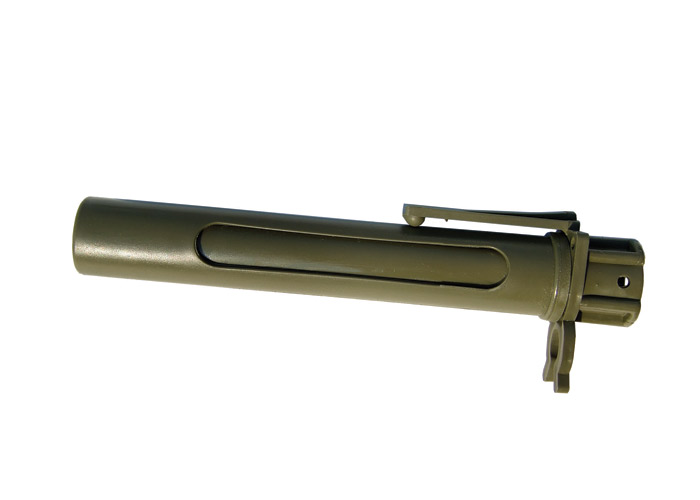


LIGHTSTATION EVACUATION BOX
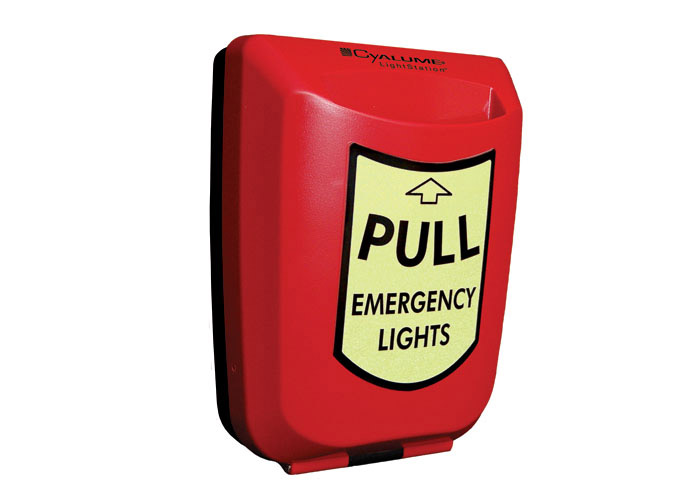

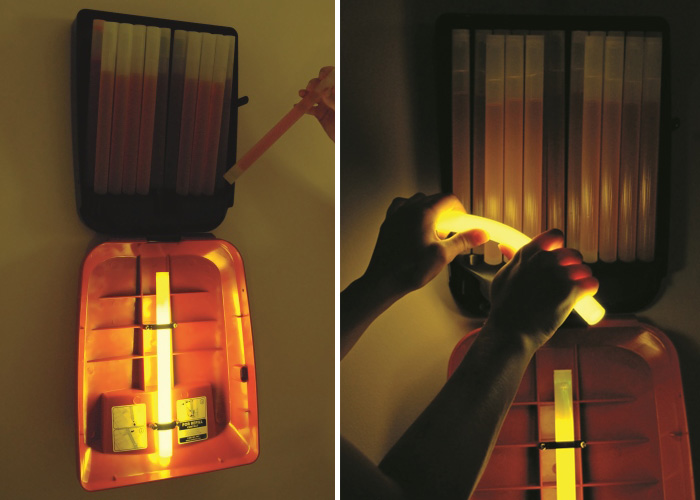
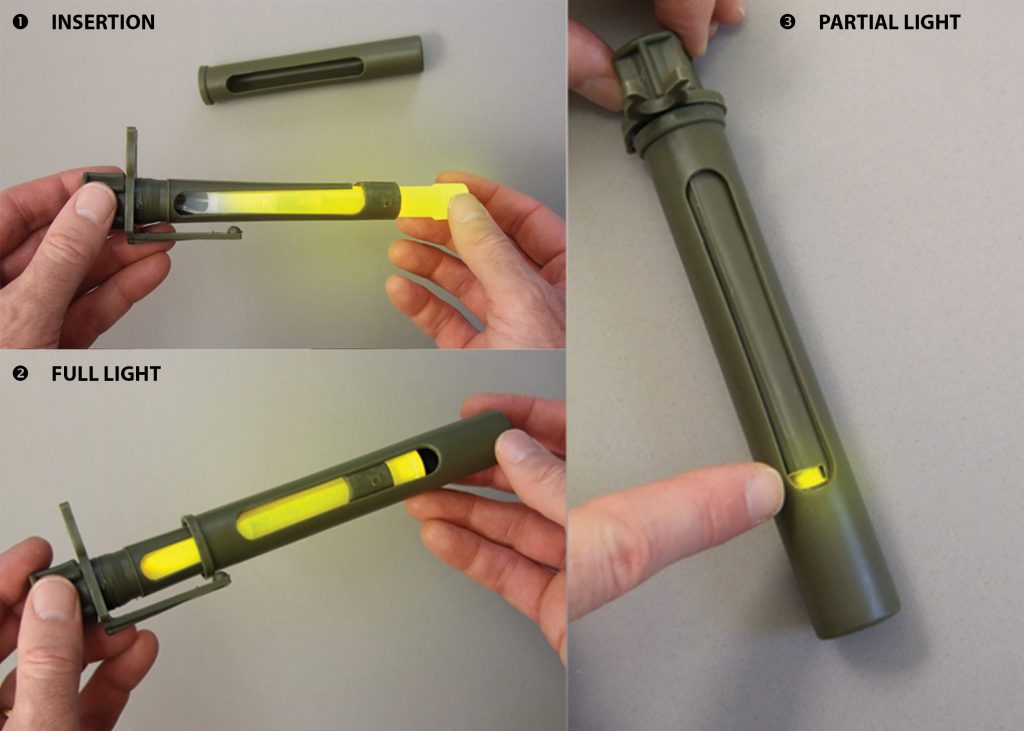
Mounts and holders determine where a lightstick can be used. The magnetic base attaches to vehicle panels and steel structures, the direction handle turns a stick into a signalling wand for traffic and aircraft marshalling, the combat light shield restricts output to a controlled direction so the source is not visible from elsewhere, and the LightStation box holds a prepared set at an evacuation point.

Frequently Asked Questions
It depends on size and type. The 1.5 inch mini runs four hours, the 4 inch runs six hours in visible and eight in infrared, and the 15 inch runs twelve hours. Infrared versions of the larger sticks are offered in three and eight hour durations. Output is brightest at activation and falls gradually across the stated period rather than stopping abruptly.
No. An IR lightstick reads clearly through night vision equipment and stays dark to anyone without it, which is what makes it usable for marking and identification without disclosing a position. The practical consequence is that everyone who needs to see the marking must be equipped with night vision, so IR marking has to be planned rather than improvised.
Chemical lights are consumable. They are activated once, run for hours, and are then discarded, which suits marking that is temporary, situational and deployed in quantity. Tritium light sources are permanent. They glow continuously for years with no activation and no power, which suits fixed marking on equipment, instruments and signs. Most operations use both, for different jobs.
Products are available under NATO Stock Numbers, listed in our NSN product list. For quantities, packaging configurations, shelf life documentation or lead times, request a quote and our team will respond directly.
