

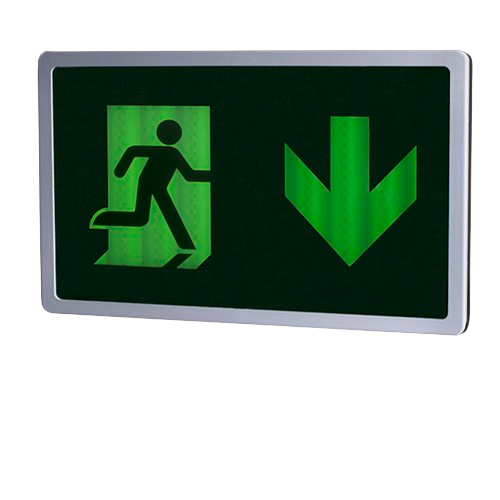

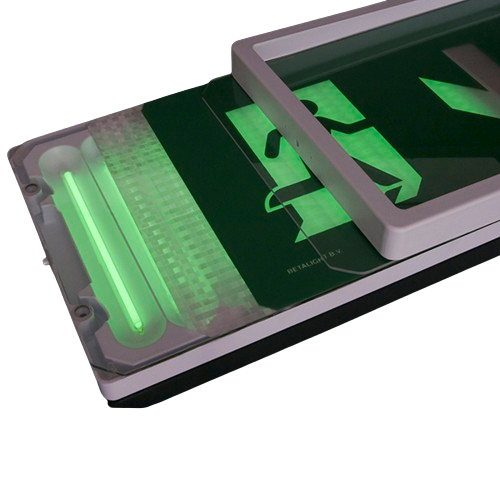
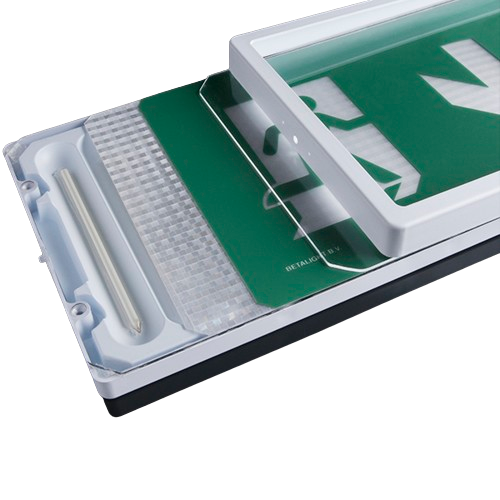

Betalux self-luminous exit signs run continuously for 15 years with no electricity, no batteries and no maintenance. They stay lit through a power failure because they were never connected to power in the first place.
Readable at 40 metres, rated from -60 °C to +80 °C, and certified to UL, NFPA Life Safety Code 101, BS 5499 Part 2, NEN 6088 and ANSI N540.
Key Features
- Certified Across Five Standards: UL listed, NFPA Life Safety Code 101, BS 5499 Part 2, NEN 6088 and ANSI N540, so one product covers sites in multiple countries.
- Readable at 40 Metres: Long sightline performance for corridors, stairwells and open plant areas.
- 15 Years of Continuous Light: Around 131,000 hours with no lamp changes, no charger and nothing to fail.
- Completely Independent: No external power, batteries, or additional light source required.
- Explosion Safe: No electrical components or ignition circuits, ideal for explosive environments like drilling platforms and refineries.
- Temperature Resistant: Functions effectively from -60 °C to +80 °C, making it suitable for extreme conditions like refrigeration cells.
- Waterproof and Vibration Resistant: Can be immersed in water and used in areas subject to high vibration, such as ships, engine rooms, and airplanes.
- EMC-Insensitive: No electromagnetic interference, suitable for use near sensitive equipment like pacemakers and hearing aids.
- Tough and Impact-Resistant: Encased in durable, fire-resistant ABS material for high impact resistance.
- Legends Changeable in Situ: Sign faces can be swapped without removing the unit, available in various legends, colours and sizes.
Niche Markets
- Remote and non-electrified locations
- Heritage and protected buildings where wiring is restricted
- Hard and soft shelters and tents
- Offshore platforms and structures
- Underground construction projects
- Hazardous atmospheres
- Inaccessible, remote or saturated environments
- Temporary signage on construction sites
- Workboats and leisure craft
- Petrochemical production and process facilities


Specifications
| Light Source | Gaseous tritium light source (GTLS), borosilicate glass |
| Service Life | Up to 15 years, approximately 131,000 hours |
| Viewing Distance | 40 m |
| Height | 210 mm |
| Width | 325 mm |
| Depth | 25 mm |
| Material | Tough, fire-resistant ABS |
| Weight | 800 g |
| Operating Temperature | -60 °C to +80 °C |
| Power Source | Self-luminous, no external power required |
| Maintenance | Maintenance-free, no batteries or annual testing |
| Waterproof | Yes, operational even when submerged |
| Impact Resistance | High, encased in durable ABS material |
| Explosion Safe | No electrical components, suitable for explosive environments |
| EMC-Insensitive | No electromagnetic interference, suitable for use near sensitive equipment |
| Vibration Resistance | Yes, suitable for high-vibration areas such as ships, engine rooms, and airplanes |
| Certifications | UL listed, NFPA Life Safety Code 101, BS 5499 part 2, NEN 6088, ANSI N540, ISO 9001 |
| End of Life | Returned for recycling or refurbishment with new light sources |
| Optional Accessories | Pendel (30 cm), Single Legends, Betaguard |
Where Self-Luminous Signage Makes Sense
The case for tritium is strongest wherever running a cable is difficult, expensive or impossible.
Heritage and protected buildings where drilling into walls is restricted. Churches, monuments and listed structures are among the most common installations for exactly this reason.
Hazardous areas where an electrical fitting introduces an ignition risk. A tritium sign generates no heat and carries no current, so the risk does not arise.
Offshore platforms, vessels and remote sites where maintenance access is costly and infrequent. Fifteen years without a visit is a very different proposition from an emergency luminaire requiring annual testing.
Anywhere a power failure is the scenario you are planning for. A self-luminous sign cannot be affected by the event it exists to cover.
For the underlying technology, see our guide on how tritium lighting works, and our article on how long tritium lasts for the decay curve across a sign’s service life.
Frequently Asked Questions
Ours are certified to UL, NFPA Life Safety Code 101, BS 5499 Part 2, NEN 6088 and ANSI N540. That combination covers US, UK, Dutch and broader international requirements from a single product, which matters for organisations specifying signage across sites in several countries. Confirm the specific requirement with your local authority having jurisdiction, since national codes occasionally add conditions.
Up to 15 years of continuous illumination, roughly 131,000 hours. Output fades gradually rather than failing suddenly, so a sign never goes dark unexpectedly. At end of life the unit is returned to us for recycling or refurbishment, and can be refitted with new light sources rather than replaced entirely.
Yes. The tritium is sealed inside borosilicate glass and emits the lowest energy radiation of any radioisotope, which cannot penetrate the glass or even a sheet of paper. A working sign emits nothing detectable, produces no heat and carries no current, which is why it is approved for hazardous atmospheres where electrical fittings are not. Damaged signs should not be handled and should be reported for proper disposal.
That is the main reason people specify them. With no electrical components there is no ignition source, so they are suitable for explosive atmospheres such as drilling platforms, refineries and petrochemical facilities. They also produce no electromagnetic interference, which allows use near sensitive equipment including pacemakers and hearing aids, and they continue working submerged.
