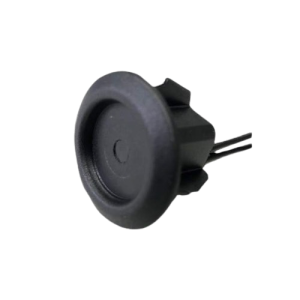
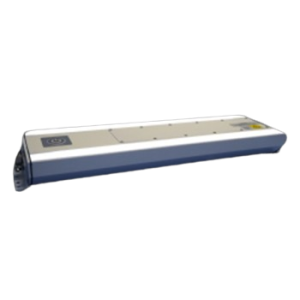
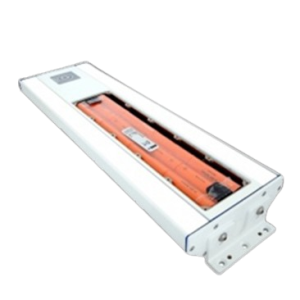
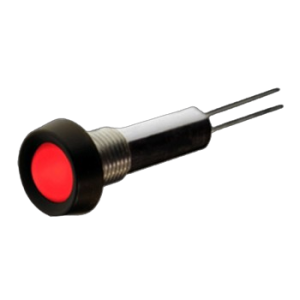
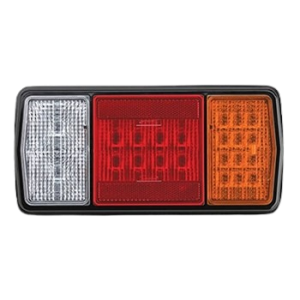
Features
- Two front functions in one lamp: a signal function for normal driving and a blackout function for tactical movement, so one mounting position does both jobs.
- Low-signature blackout output: marks the front of the vehicle for nearby vehicles in the column while keeping light to a minimum for distant observers.
- Works with the main light switch: the blackout function is wired into the vehicle’s blackout circuit and selected with the BO MARKER and BO DRIVE positions.
- Part of a complete blackout system: pairs with a blackout driving light and rear blackout markers for a full front and rear layout.
- Solid-state LED: no filament to break under shock and vibration, and no lamp changes in the field.
- One lamp for mixed fleets: a single part covers both 12 V and 24 V vehicle electrical systems, which simplifies spares holdings.
- Harness flexibility: supplied with a cable or with military or automotive connectors, so it fits new builds and existing vehicle harnesses.
What is a front signal and blackout lamp?
A front signal and blackout lamp combines two front lighting functions in one housing. During normal driving it provides a front signal function as part of the vehicle’s service lighting. When the vehicle switches to blackout lighting, it provides the front blackout marker that shows the vehicle’s position to the vehicles around it.
US Army technical manuals describe a blackout lighting system as front blackout marker lights, a blackout drive light, rear blackout marker lights and blackout stop lights. NATO sets out common requirements for these systems in STANAG 4381. The purpose of the markers is to show vehicle position to a leading or trailing vehicle when light must be restricted to a level a distant enemy cannot see. Front markers are usually mounted below or beside the headlamps.
Integration and Configuration
The lamp is normally fitted as a left and right pair at the front of the vehicle, with the blackout function wired into the blackout lighting circuit. For a complete system, combine it with a blackout driving light at the front and our blackout rear and stop marker at the rear. Connection is by cable, by MS27142 military single-contact connectors or by an AMP Superseal 1.5 connector, so the lamp can be matched to the vehicle’s existing harness.

Specifications
| Model | 420047 |
| Description | LED Front, Signal – Blackout lamp |
| Input Voltage | 10V – 32V DC |
| Lens Material | Polycarbonate |
| Housing Material | Composite |
| Housing Colour | Black, Olive Green, Desert |
| Connector | Cable / MS27142-3, 282106-1 AMP |
| Standards | Sealed to IP 68 Compatible with ML-STD 461E Compatible with ML-STD 810 |

Service and Blackout Lighting From One Front Position
Space at the front of a tactical vehicle is limited, and every extra lamp adds a mounting point, a harness branch and another spare to stock. Combining the signal and blackout functions in one lamp keeps the front of the vehicle simple. The driver changes between service and blackout lighting at the main light switch, and the same lamp answers in both modes.
The lamp is listed as compatible with MIL-STD-461E, the US Department of Defense standard for controlling electromagnetic emissions and susceptibility, which matters on vehicles that carry radios and electronic systems close to the lighting. It is also listed as compatible with MIL-STD-810, the test method standard for environmental conditions such as shock, vibration, temperature and humidity. Sealing to IP 68 means the housing is dust-tight and protected against prolonged immersion, which suits vehicles that ford water and operate in sand and dust.
Frequently Asked Questions
It gives a military vehicle two front lighting functions from one lamp. In service lighting it provides the front signal function. In blackout lighting it provides the front blackout marker, which shows the vehicle’s position to nearby vehicles while keeping the light signature low.
The blackout function is wired into the vehicle’s blackout lighting circuit. On a typical military main light switch it is lit in the BO MARKER and BO DRIVE positions. In SER DRIVE the blackout lights are off and the service lighting is used.
A blackout lighting system normally combines front blackout markers with a blackout driving light, rear blackout markers and blackout stop lights. All of these are available in our blackout lights range.
Yes. The input voltage range of 10 V to 32 V DC covers both 12 V and 24 V vehicle electrical systems, so one part number can be used across a mixed fleet.
The lamp is listed as compatible with MIL-STD-461E for electromagnetic emissions and susceptibility, and with MIL-STD-810 for environmental conditions such as shock and vibration. It is sealed to IP 68, which means it is dust-tight and protected against prolonged immersion in water.