

The Evolution of Tactical Lighting: Fire to High-Tech Light
The evolution of tactical lighting runs from signal torches and siege fires to carbon arc searchlights, blackout lamps, infrared emitters and the LED vehicle lamps fitted today. At every stage the aim has been the same: give your own side enough light to move, fight and signal, while showing the enemy as little as possible.
This history of military lighting follows that thread era by era, with dates checked against manuals, standards and museum sources. Where the story reaches vehicles, it shows how blackout, infrared secure and LED lighting came about, and why they matter to a fleet specified today.
Ancient History (c. 3000 BC to 500 AD)
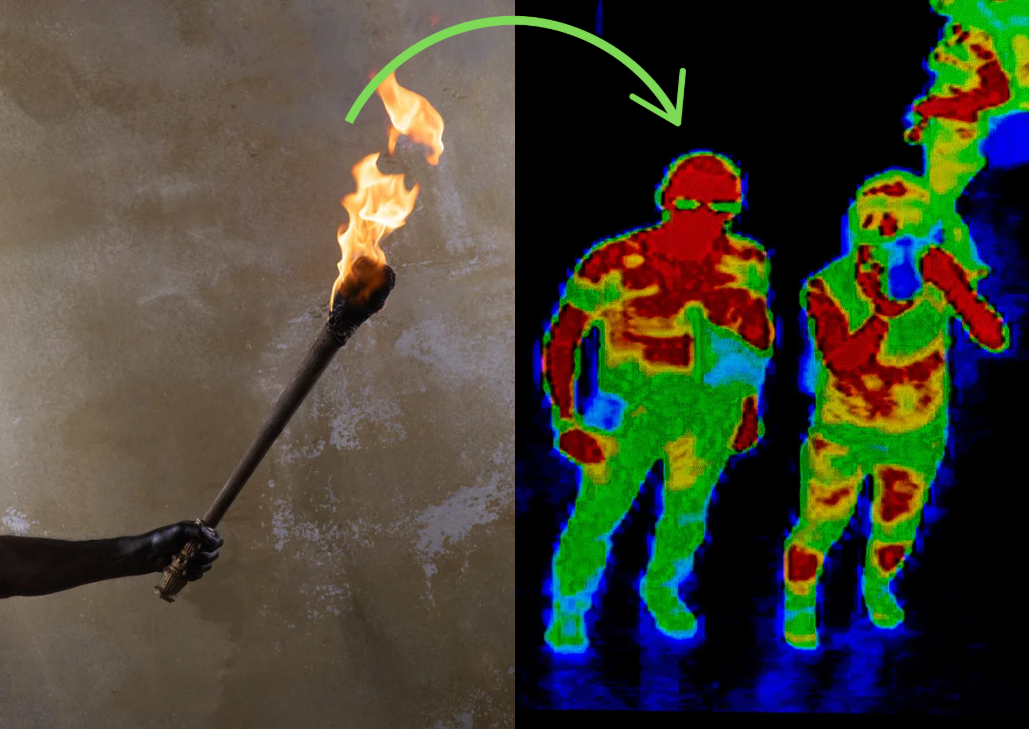
Light has played a role in war since the earliest civilisations, and for most of recorded history fire was the only artificial light an army had. It already served the three purposes that still define tactical lighting: seeing, signalling and denying the enemy a clear view.
Bonfires and torches lit camps at night and helped armies keep order in darkness. Fire was also a signalling medium. The Greek historian Polybius (c. 200 to c. 118 BC) describes a system credited to Cleoxenus and Democleitus in which torches were raised and lowered to mark the row and column of each letter, so that long messages could be sent instead of prearranged codes.
Middle Ages (500 to 1500 AD)
As armies grew, candles and oil lamps lit camps, guard posts and fortifications. Their output was weak and their flames were easy to see from a distance. That trade between seeing and being seen has shaped every later generation of military lighting.
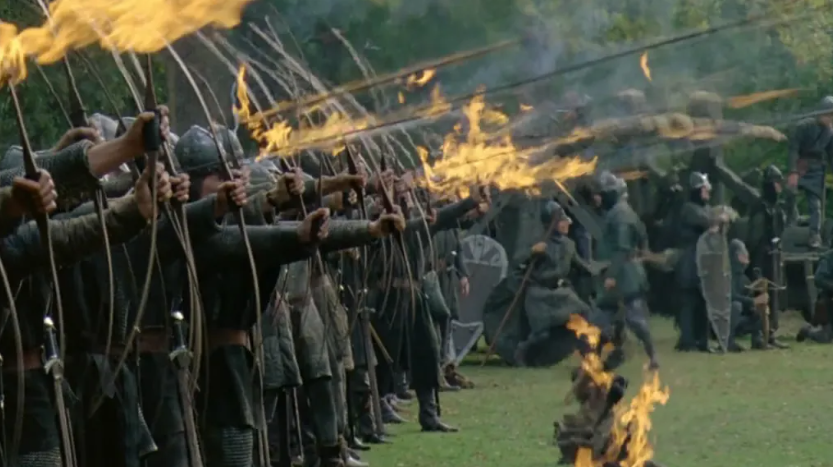
Fire also played a more aggressive role in combat. Fire arrows, projectiles wrapped in flammable material, were used in sieges and night raids. The Byzantine Empire used Greek fire, an incendiary weapon, against the Arab fleets during the Siege of Constantinople of 674 to 678.
From the Age of Enlightenment to the First Searchlights (1700 to 1900)
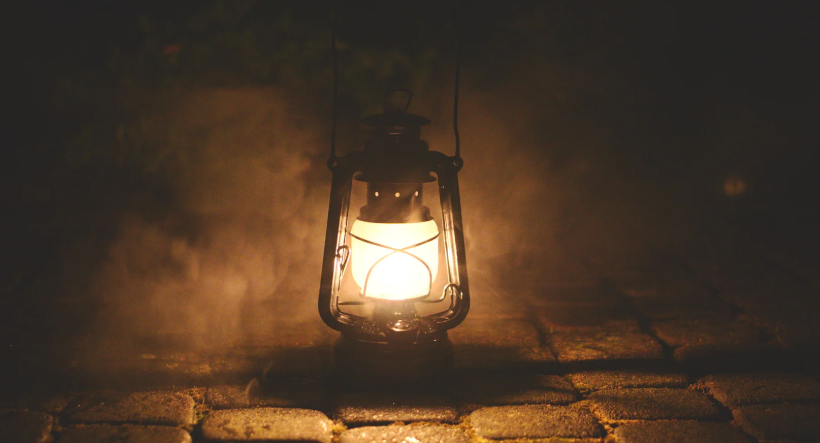
Lanterns burning oil or candles remained the standard military light through the 18th century. Gas lighting arrived only at its very end: William Murdoch lit his house in Redruth with coal gas in 1792, and the first gas street lighting followed in Salford in 1806. Piped gas suited buildings and streets, not armies in the field.
The decisive step was electric light. Searchlights using carbon arc lamps were first used during the Siege of Paris in the Franco-Prussian War of 1870 to 1871. In 1882 the Royal Navy used searchlights at Alexandria to dazzle Egyptian forces and stop them manning their artillery batteries at night.
Searchlights were used again in the Russo-Japanese War of 1904 to 1905. By then the searchlight was a recognised military instrument, able to find targets in poor visibility and to blind the people it was pointed at.
World War I (1914 to 1918)
When World War I erupted, artificial lighting became an essential component of combat. Flares fired from signal pistols, often called Very lights after the US naval officer Edward Wilson Very, lit no man’s land and signalled troop movements.
Searchlights were employed on a mass scale. In Britain they were used heavily against German night raids, including those by Zeppelins, and on the battlefield their beams were reflected off the underside of clouds to create artificial moonlight for night attacks.
World War II (1939-1945)
The Canal Defence Light
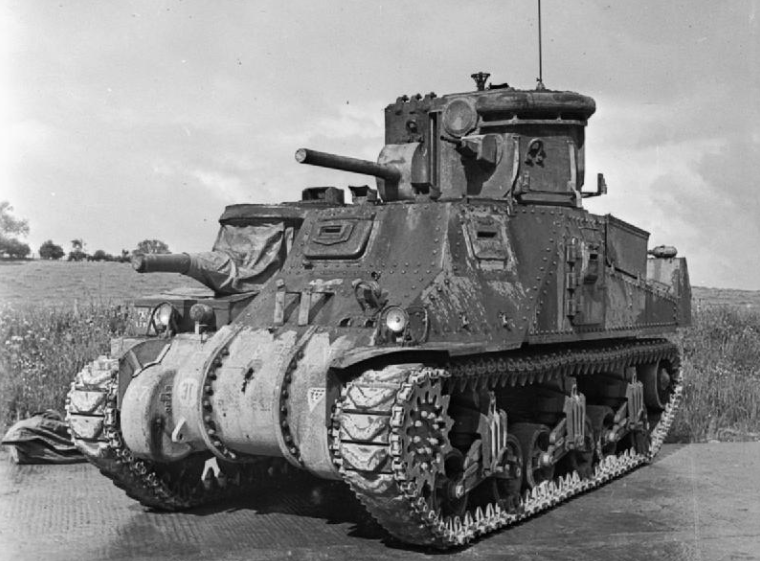
One of the most unusual lighting weapons of the war was the Canal Defence Light (CDL), a tank carrying a 13 million candlepower carbon arc searchlight in a special turret. Devised in the 1930s by Marcel Mitzakis for the de Thoren syndicate and demonstrated to the British War Office in 1937, it was fitted first to the Matilda II and then to the M3 Grant.
The beam left through a narrow vertical slit, and a shutter could flicker it about twice a second to dazzle and disorient defenders. The idea was to fight under artificial light that blinded the enemy, but few CDLs saw action, and only in the last months of the war.
Target Indicators from the Air
Lighting was not just for illumination but also a tactical measure. The RAF Pathfinder Force, formed in August 1942, marked targets with target indicators: pyrotechnic markers that ejected coloured flares or lit the target so the main bomber force could aim at it. They were first used on the night of 10/11 September 1942, against Düsseldorf.
Blackout Lighting Reaches the Vehicle
The war also changed how vehicles were lit. Britain imposed blackout regulations on 1 September 1939, and vehicle headlights were fitted with slotted covers that deflected the beam down to the road. Night driving became far more dangerous and fatalities rose, so some rules were relaxed and speed limits lowered.
Military vehicles went further and carried a second, dedicated lighting system. The War Department manual for the Willys MB and Ford GPW jeep, TM 9-803 of 22 February 1944, describes a blackout driving light on the left front fender, blackout headlights and blackout stop and tail lights, selected by a four-position push-pull switch with a safety lock.
That layout, a low drive light plus small lamps that tell the next driver where you are and when you brake, is still the basis of military blackout lights today. How the switch modes and the cat’s eyes pattern work on a current vehicle is explained in our guide to blackout marker lights.
The Cold War Era (1947 to 1991)
As technology progressed, the focus shifted from visible light to seeing in the dark. The first systems were active: a filtered lamp lit the target in near infrared and an image converter made it visible. Germany fielded the Vampir sight on the StG 44 in the last months of the Second World War, and the US M1 and M3 sniperscopes saw limited service in that war and in Korea.
An active system gives itself away to anyone with a similar viewer, so the next step was passive. First-generation image intensifiers, which amplify starlight and moonlight, were developed by the US Army in the 1960s and introduced during the Vietnam War. Microchannel plate tubes followed in the late 1970s and gallium arsenide tubes in the 1980s, as our guide to night vision generations explains.
Infrared Secure Vehicle Lighting
Night vision changed what a vehicle lamp had to hide. A blackout lamp that looks dim to the eye can still stand out through an image intensifier if it emits near infrared, as an incandescent filament does. The US vehicle lighting standard MIL-STD-1179 applies infrared secure photometric requirements to new military vehicles manufactured after 1 September 1988.
At the same time, armies added lamps meant to be seen only through goggles: infrared lamps that light the route for a driver wearing night vision goggles and infrared markers for the vehicle behind. Early infrared sources, like the lamp of the Vampir sight, were tungsten bulbs behind a filter that passed only infrared light.
The Modern Era (1991 to Present)
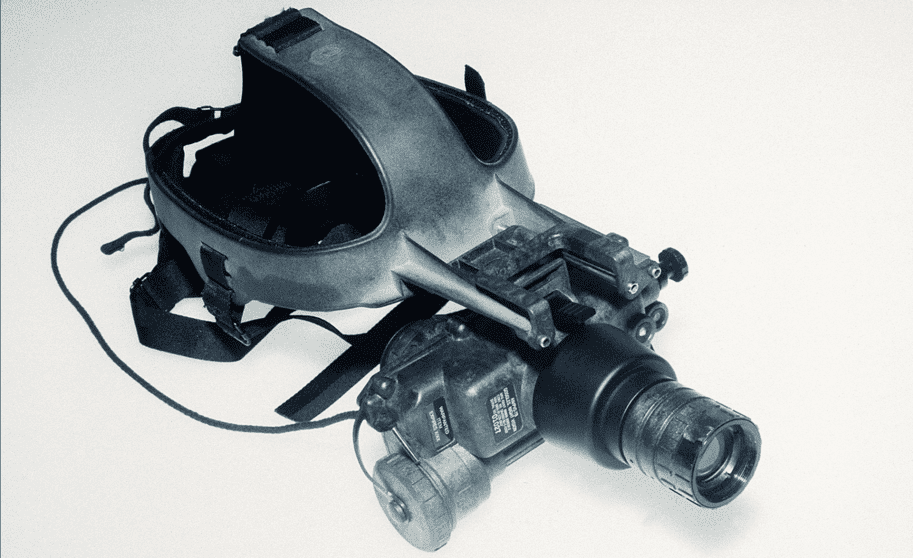
Current image intensifiers amplify ambient light many thousands of times, so soldiers can move in near darkness without a visible light of their own. Thermal imagers work on a different principle. They detect the heat a scene emits, need no light at all and show vehicles and people by their heat signatures.
On vehicles, one housing now often carries several functions that once needed separate lamps. Our tail lights with blackout function, for example, combine tail, brake, indicator, convoy, blackout brake and blackout position functions in one compact unit.
LED Lamps and NATO Blackout Standards
The LED made covert lighting easier to engineer, because a diode emits in a narrow wavelength band instead of radiating across the visible and infrared like a filament. In 2008 and 2009 the US issued a family of LED lamp specifications, including MIL-PRF-32212A for stop, turn and tail lamps with infrared secure blackout functions and MIL-PRF-32215A for an infrared secure blackout front driving lamp.
In NATO, blackout lighting for tactical land vehicles has been standardised since STANAG 4381 was first promulgated on 8 July 1994. National implementations of its second edition, such as the Czech defence standard ČOS 254001, set a numerical limit on the near infrared a visible tactical lamp may emit.
A modern fit therefore pairs two kinds of lamp. IR driving lights such as the Model 2343, which emits between 770 and 840 nm, light the route for a driver on goggles, while the blackout lamps give a dim visible pattern that stays discreet through the same goggles.
From burning torches to infrared secure LED lamps, the evolution of tactical lighting has followed one rule: control who can see the light. Light has been a weapon, a signal and a shield for thousands of years, and on a modern military vehicle it is specified as carefully as any other system.
Frequently Asked Questions
It means a visible lamp, usually a blackout lamp, emits so little near infrared that it does not stand out through night vision goggles. ČOS 254001, the Czech implementation of STANAG 4381 Edition 2, sets the limit at no more than 1% of the lamp’s visible peak in the 700 to 1,200 nm range. US LED lamp specifications such as MIL-PRF-32212A use the term in their titles.
Not automatically. MIL-STD-1179E applies the infrared secure photometric requirements to new vehicles from serial number 1 manufactured after 1 September 1988. Older vehicles are brought up to the secure lighting requirements on retrofit, rebuild or modification when the modifying government agency decides there is a need. ČOS 254001 likewise recommends its requirements at rebuilds, inspections and repairs, so a life extension programme is the natural point to change lamps.
Only briefly, in 1944 and 1945. In Operation Clipper in November 1944, CDLs of the 357th Searchlight Battery, Royal Artillery, lit the way for mine-clearing flail tanks. US M3 CDLs of the 738th Tank Battalion helped defend the captured Ludendorff Bridge at Remagen in March 1945, and British M3 Grant CDLs supported the Rhine crossing at Rees.
Because an image intensifier still needs some light. US Army goggle driving training relates performance directly to the available starlight and moonlight, and on an overcast, moonless night an infrared lamp adds light that only the goggles use. Thermal imagers do not show a near infrared marker, so forces that field thermal sights still carry infrared emitters for marking and identification.