

STANAG 7056: Physiological Protection in High Altitude Parachuting
STANAG 7056 defines the minimum functional requirements for physiological protection during high altitude parachuting operations. Ratified on 20 October 1997, it gives NATO forces a common basis for oxygen provision, pre-breathing and monitoring on jumps flown above the altitudes at which unprotected personnel can safely operate.
The standard exists because altitude harms people in two separate ways at once, and the countermeasures for one do not address the other.
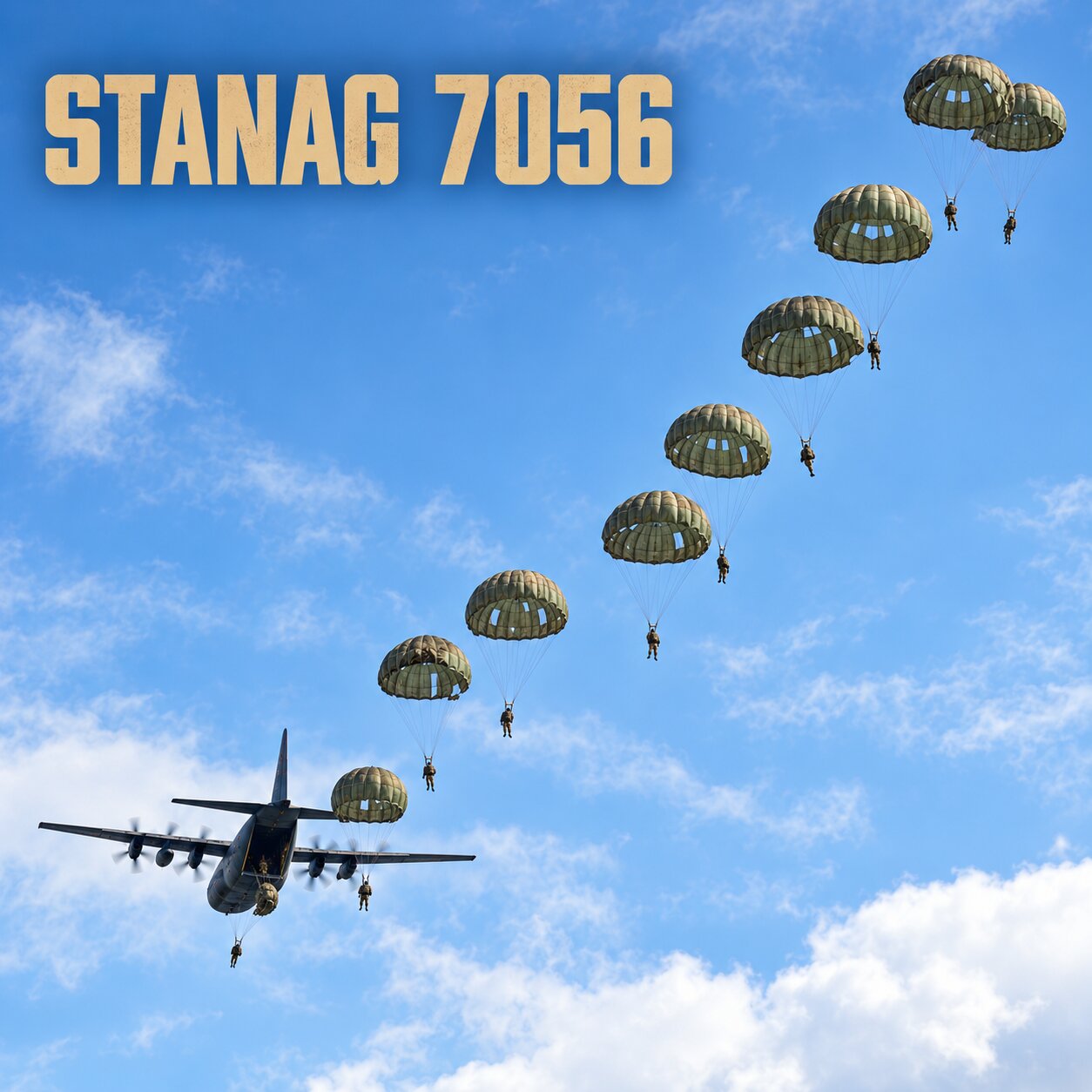
What STANAG 7056 Covers
The aim of the agreement is to define the minimum functional requirements for physiological protection during high altitude parachuting operations. In practice that means oxygen systems, pre-breathing protocols, thermal protection and the monitoring regime that sits around them.
It applies to military free fall operations, both high altitude low opening and high altitude high opening, and to the aircrew and support personnel in the unpressurised aircraft carrying them. The aircraft is the key point: everyone on board is exposed, not just the people who jump.
STANAG 7056 was ratified in 1997 and, as with any NATO standardisation agreement, national implementation and the current edition should be confirmed with your own national authority before it is written into a specification.
Two Different Problems
Altitude presents two physiological hazards that are frequently conflated and require different countermeasures.
| Hazard | Cause | Countermeasure |
|---|---|---|
| Hypoxia | Falling partial pressure of oxygen with altitude, so the blood cannot take up enough oxygen from ordinary air | Supplemental oxygen, continuously, from before exposure until back below the threshold altitude |
| Decompression sickness | Nitrogen dissolved in the tissues coming out of solution as ambient pressure falls, forming bubbles | De-nitrogenation before exposure, by breathing 100% oxygen to displace nitrogen from the tissues |
| Cold | Ambient temperature falling with altitude, compounded by wind chill in free fall and under canopy | Thermal protection integrated with the oxygen and harness assembly |
The distinction matters operationally. Oxygen fixes hypoxia immediately on demand. It does nothing for decompression sickness once the nitrogen has already come out of solution, which is why the standard imposes a timed protocol before the aircraft climbs rather than a response once it is up there.
The Altitude Thresholds
The protocol is built around specific altitudes rather than around the jump itself, and the sequence starts long before anyone leaves the aircraft.
The consequence for planning is that the physiological clock starts on the ground. A jump above 18,000 ft commits the aircraft and everyone in it to a sequence that cannot be compressed, and a delay on the ground with the pre-breathe already running is a real constraint rather than an inconvenience.
Protection Measures
| Measure | What it addresses |
|---|---|
| Oxygen systems | Continuous breathing oxygen from the aircraft supply and then from a personal bottle after exit, to prevent hypoxia throughout the exposure. |
| Pre-breathing and de-nitrogenation | Displacing dissolved nitrogen from the tissues before ascent, to reduce the incidence of decompression sickness. |
| Thermal protection | Insulation against the temperatures encountered at altitude and the wind chill of free fall and canopy flight. |
| Helmet and mask integration | Ensuring the mask, communications, vision and life support systems function together rather than obstructing one another. |
| Monitoring and recording | Tracking pre-breathing times and exposure from 16,000 ft to the maximum altitude and back down, so that post-jump symptoms can be assessed against a known profile. |
Helmet and mask integration is where equipment decisions collide. A mask, a helmet, night vision equipment, communications and an oxygen supply all compete for the same few centimetres around the face, and anything mounted there has to coexist with the rest. That is the point at which lighting becomes part of this standard’s problem rather than a separate subject.
What This Means for Lighting
High altitude jumps are usually flown at night, and the physiological protection creates three lighting problems that a daylight jump does not have.
On the jumper, marking has to be readable through night vision equipment and invisible without it, small enough to survive the competition for space around the helmet, and impossible to snag on deployment. A helmet light beacon or an infrared beacon covers most of that. Where a battery is a liability, and it often is after an hour at altitude in the cold, an infrared chemical light works without one and does not care about the temperature. The rest of the personal marking and illumination range sits under military equipment.
In the aircraft, the constraint is different. Cabin and utility lighting has to allow equipment checks through a long unpressurised climb without destroying the dark adaptation everyone needs at the door. That means night vision compatibility, which is a specific qualification under MIL-STD-3009 rather than a matter of fitting a dimmer lamp. Our aviation lighting range covers cabin, cockpit and flight deck fittings built to it.
Frequently Asked Questions
It defines the minimum functional requirements for physiological protection during high altitude parachuting operations: oxygen provision, pre-breathing and de-nitrogenation before ascent, thermal protection, integration of helmet and mask systems, and monitoring of exposure. It was ratified on 20 October 1997.
Where an aircraft intends to climb above 18,000 ft, a period of de-nitrogenation is required, and it must be completed before the aircraft reaches 16,000 ft. Pre-breathing 100% oxygen for up to an hour is the usual means. Exposure is then monitored and recorded from 16,000 ft to the maximum altitude and back down to 10,000 ft.
Hypoxia is insufficient oxygen uptake as the partial pressure of oxygen falls with altitude, and supplemental oxygen addresses it directly. Decompression sickness is dissolved nitrogen coming out of solution in the tissues as ambient pressure drops, and oxygen given at altitude does not fix it once it has begun. That is why the nitrogen has to be displaced before the climb rather than treated during it.
Because these operations are usually flown at night, and the physiological equipment takes up the space lighting would otherwise occupy. A masked jumper wearing night vision equipment has almost no mounting area left, so personal marking has to be small, snag-free and readable through NVGs rather than to the naked eye. In the aircraft, cabin lighting has to permit equipment checks during a long unpressurised climb without destroying dark adaptation or interfering with night vision.
A high opening canopy flight can last ten to twenty minutes, which is a long time to be visible. Infrared marking lets a stick hold formation and avoid collision while showing nothing to anyone without night vision equipment. The trade is that everyone who needs to see the marking must be equipped for it, so infrared marking is planned rather than improvised.
No. We supply lighting and marking, not physiological protection equipment. This article covers STANAG 7056 because high altitude operations impose real constraints on what lighting can be carried and how it has to perform, not because we supply the oxygen systems the standard governs.